
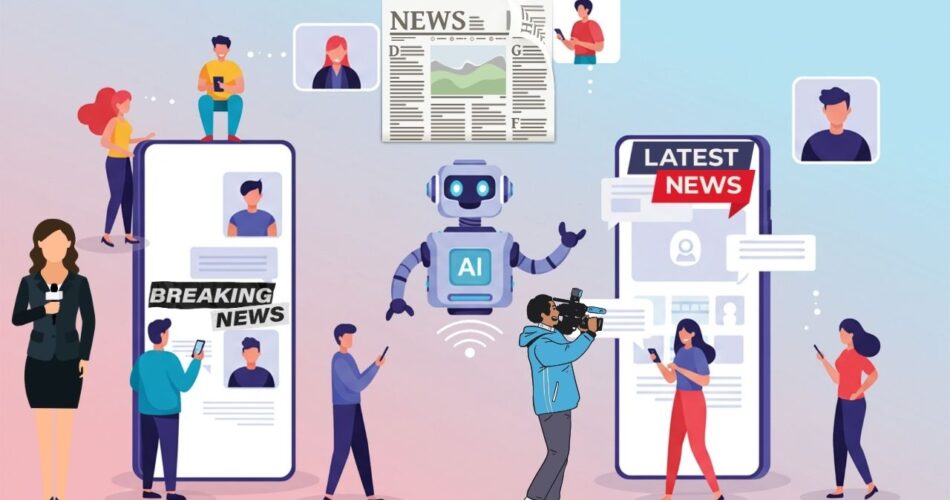
The misinformation around AI makes it difficult for journalists. They want to know if AI can replace the tedious aspects of my work. Is using it for reporting or writing even morally acceptable? Can I believe anything a chatbot says? Do tech companies use our work without our consent? Worst of all, could I be replaced by this technology?
Table of Contents
Shifting Focus from Production to Value
All of those are legitimate and significant considerations, particularly for those in the media industry. However, there is a more significant problem that is frequently disregarded. It’s not only about what AI implies for us as content producers; it’s also about how it will alter the preferences and news consumption patterns of our audience. Determining how the news industry can adapt to these changes is the true problem.
Declining Search Traffic
This isn’t some concern for the far future; it’s happening right now. Because more consumers are using Google and other AI-generated summaries rather than going through numerous links or reading different versions of the same topic, search traffic is declining.
And that’s only the start. It is anticipated that generative AI will fundamentally alter how individuals locate and engage with information, including how they obtain it, what they anticipate from it, and how they use it. Our entire conception of what a “story” is will be called into question by this change.
Rethinking Content and Delivery
These days, creating articles isn’t enough; we also need to reconsider what should be covered and how to convey information. To put it briefly, we will have to reevaluate both what we are producing and for whom.
As AI gets better at creating personalized content based on what it knows about each person’s interests and knowledge level, what happens to the in-depth stories journalists spend days or even weeks crafting?
Will the true value of journalism shift from the way we write to what we bring — the questions we ask, the facts we uncover, the insights we offer, and the trust we build with our audience?
If machines are going to take our reporting and repackage it, we may need to rethink how we present our work. What formats make sense in this new landscape? Will we need to understand how to optimize for AI-powered search tools instead of just human readers?
And as new technical standards emerge, will they help support journalism’s mission — or make it even harder to inform the public?
New Business Models
If journalism no longer had to take a one-size-fits-all approach, what new opportunities may arise? AI could assist us in customizing material to certain interests or niche communities rather than attempting to reach the largest audience with a single version of a story.
What if we created resources that allowed readers to delve deeper and make it obvious which aspects of an article are analysis, which are facts, and which represent the journalist’s personal viewpoint? Any resources that make it simple to compare the coverage of the same event by several news sources?
Building these kinds of tools isn’t hard, and they have the potential to change how people see and trust the news.
Opportunities for Innovation
Written content is no longer the only focus. AI is already being used by certain news organizations to produce visuals that complement their articles. Others have gone further, and in a more contentious way, by experimenting with using AI-generated news anchors to present stories.
And that’s not even including all the ways AI can already make our jobs easier. It can help with editing and proofreading, scan our drafts to find related articles online, and even suggest or create charts to support the story.
Ethical Concerns and Risks
That’s not to say all these changes are necessarily good — or even mostly good.
As news becomes more personalized, there’s a real risk that people end up stuck in their own little bubbles — only seeing information that confirms what they already believe, without being exposed to different viewpoints.
The real challenge will be finding ways to build a shared understanding of the world, while still respecting that people have different perspectives and interests — something the news industry has struggled with in the past.
Journalist Role
And then there’s the big question: how will the people creating all this information actually earn a living? If we’re no longer paid through page views or ad clicks — and if “news” turns into a mix of content pulled from many different sources — what kind of business model will keep journalism going?
Maybe the value won’t just come from what we write, but from what we know and who trusts us. In the end, it might not be the content itself that matters most, but the community we build around it.
If the AI revolution ends up being anything like the internet or social media changes — and so far, it looks like it could be even more disruptive — then we don’t have much time to figure out how to handle it.
The Future of Media
Others are hopeful about these developments. Demand for dependable, unique voices is rising, particularly in video and other media. Furthermore, AI is still unable to readily replace the fundamental task of journalism, which is gathering material that isn’t yet available online.
However, live events—whether in-person or online—may become even more crucial in enabling viewers to interact with newsmakers and gain a more profound comprehension of significant subjects.
Next Post: Discover 7 Key Types of Email Marketing


