
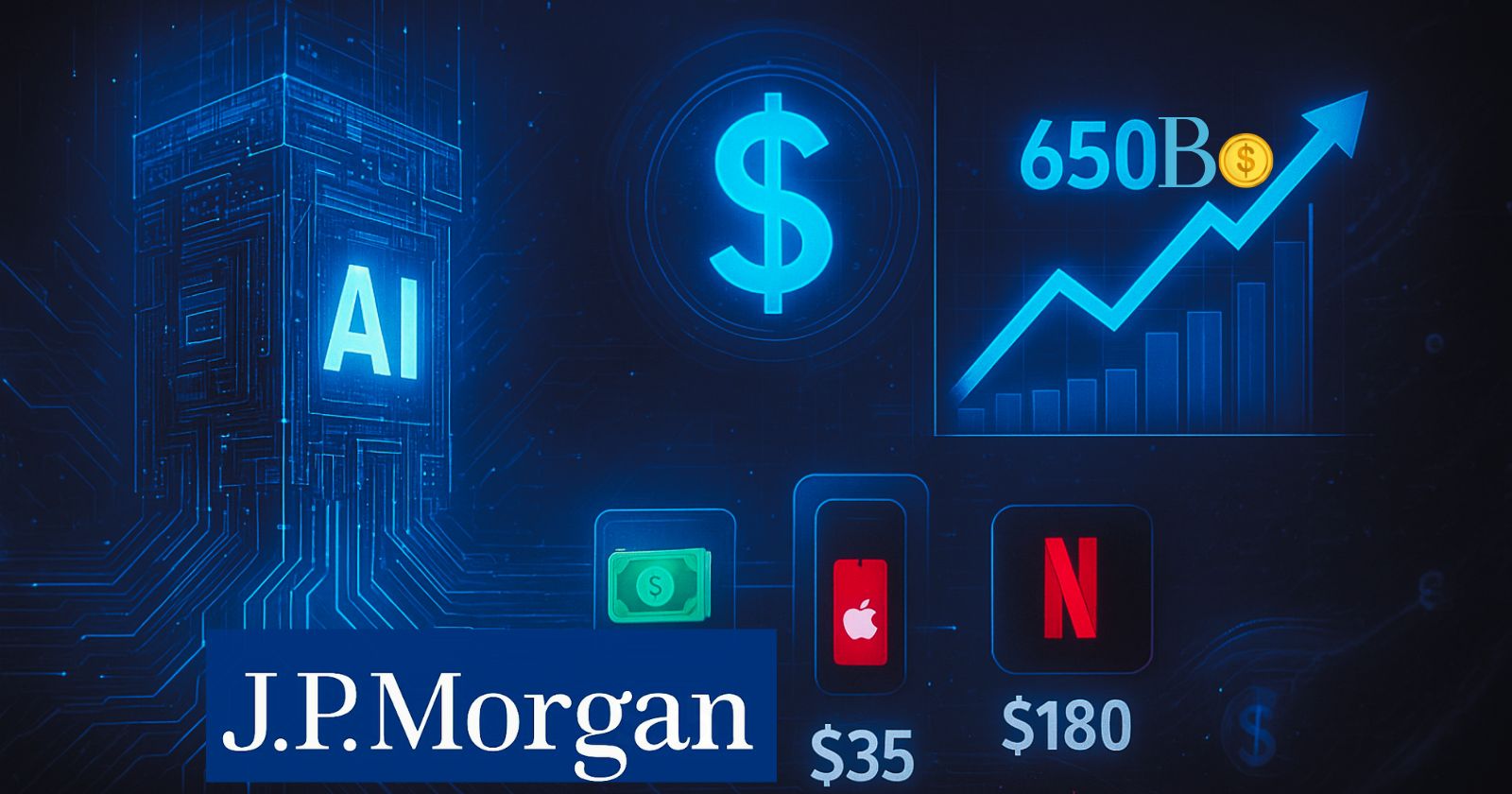
A new report from J.P. Morgan highlights just how massive the AI investment challenge really is. According to the bank, the AI sector would need to generate about $650 billion in yearly revenue just to achieve a 10% return on the spending expected through 2030.
To put that into perspective, it’s like every iPhone user paying an extra $34.72 a month, or every Netflix subscriber paying $180, and doing so continuously to make the math work.
Those numbers might seem achievable—but the scale tells a different story. There are roughly 1.5 billion iPhone users and over 300 million paying Netflix subscribers worldwide.
Even if the cost is spread across individuals, companies, and governments, it still adds up to a huge base of paying users. And with many consumers still uncertain about the real value of AI-powered PCs and smartphones, reaching that level of adoption won’t be easy.
AI’s growth may not follow a steady path, drawing a comparison to the telecom industry’s early struggles with costly fiber infrastructure. While the company aims to generate around $20 to $25 billion in annualized revenue by 2026, these figures are still projections. For now, they reflect ambitious goals rather than actual profits, showing that the road to sustainable returns in AI is still a work in progress.
The sudden technological breakthrough could trigger overcapacity, end up with billions of dollars’ worth of AI data centers sitting idle, because demand can’t keep up with the massive computing power being built.
Many industry experts are sounding the alarm. While companies haven’t yet seen major gains from AI, the technology is already shaking up the service provider landscape. If that bubble were to burst, the impact could spread far beyond the AI sector—putting nearly $20 trillion in market value at risk, even for businesses only loosely connected to AI.
Despite its warnings, J.P. Morgan’s report isn’t entirely pessimistic. It notes that even if the AI industry succeeds, there will still be big winners and big losers, given the huge capital at stake and the winner-takes-all dynamics of the market. In other words, even without an AI bubble bursting, some of today’s leading AI giants could still face major setbacks, while others soar ahead.
Also Read: AMD Rides AI Wave to 35% Yearly Growth, Says CEO Lisa Su


